Neuropathy Treatments
Shockwave Therapy
Shockwave therapy uses focused acoustic pressure waves to stimulate circulation and the body's own tissue-repair response. At The Roots, it's used where your evaluation indicates it — most often for foot and lower-leg complaints that ride along with nerve symptoms. Sessions run 8–15 minutes.
Ask about your situation
Three quick questions — our team responds within one business day.
- 4.8 from 655+ Google reviews
- Caring for the Suncoast since 2016
- Led by the author of a book on reversing neuropathy
- Drug-free & surgery-free program
What shockwave therapy is — and how it fits nerve care
Despite the intense-sounding name, shockwave treatment is a non-invasive, needle-free therapy: a handheld applicator delivers rapid acoustic pulses into the tissue being treated. Those pressure waves are the industry's workhorse for stimulating local blood flow and the biological signals involved in tissue repair — which is why shockwave treatment has become a mainstay for stubborn tendon and foot problems.
Where does that meet neuropathy? Through the same doorway everything in our program goes through: circulation and tissue health. Many neuropathy patients also carry foot and lower-leg problems — plantar pain, chronically tight calves, tissue that's simply been under-supplied for years. Supporting the health of the tissue around struggling nerves is part of improving the environment those nerves live in.
To be precise about the claim: shockwave therapy is used in our clinic where the evaluation indicates it — it isn't applied to every neuropathy case, and it isn't sold as a nerve cure anywhere, including here. It's one tool with a specific job, chosen when your findings say the job needs doing.
What a session feels like
Sessions are short — 8 to 15 minutes for the area being treated. The applicator delivers rhythmic pulses that most patients describe as intense tapping; it's noticeable, occasionally tender over tight spots, and over quickly. There's no anesthesia, no downtime, and you walk out and resume your day.
- 8–15 minutes per session
- Non-invasive — no needles, no medication, no downtime
- Feels like strong, rapid tapping; intensity is adjusted to your comfort
- Often combined with other program components in the same visit
Who it's for — and who decides
Your evaluation decides, not a menu. If your findings show tissue and circulation problems in areas where shockwave treatment has a track record — feet, heels, calves — it may earn a place in your plan alongside red light therapy, chiropractic care, and balance work. If your case doesn't indicate it, it won't be recommended, and nothing about your plan suffers for that.
As with everything at The Roots, progress is re-measured at objective re-exams, so you and the doctor can see whether each component of the plan is pulling its weight.

Medically reviewed by
Founder & Clinical Director of The Roots Neuropathy and author of The Truth About Reversing Neuropathy Now. He leads every neuropathy evaluation and care plan at our Lakewood Ranch clinic.
Common Questions
Frequently asked questions
More ways we can help
Neuropathy Evaluation & Testing
Objective testing that shows what's actually happening in your nerves — circulation, sensation, and balance.
Balance Testing & Training
In-clinic balance measurement and retraining — because falls, not foot pain, are neuropathy's biggest everyday risk.
The Roots Neuropathy Program
Our structured, drug-free program built around the four things struggling nerves need most.
Red Light Therapy for Neuropathy
Painless 15-minute light sessions that support circulation — a core piece of our nerve-care plans.
Chiropractic Care for Neuropathy
Gentle, instrument-assisted care that supports the nervous system behind your symptoms.

Nutritional Support for Nerve Health
Practical guidance on the nutrients nerves depend on — and the deficiencies that quietly work against them.
Conditions this supports
Symptoms it can help with

From the clinic
Watch: Shockwave Therapy in practice
Verified Google Reviews
What Neuropathy Patients Say
I’m enjoying my treatments at roots , I wish I would have found them sooner . They have helped me so much . I have neuropathy and before I started going I could barely walk and was in so much pain. Now after a little over 4 weeks my pain is barely there and walking is so much better! Also getting adjustments from Dr Logan and it’s improved how I feel physically, and has helped my sleep and more. There are so many different areas they can help you in , give them a call I highly recommend them.”
kimberly L.
Neuropathy TreatmentEveryone at Roots is super warm and inviting! There is a calming atmosphere and calming aroma the second you walk in. They are all about educating their patients! I have been going for about 3 months and I am feeling about 90% better! No more nerve pain as well as better sleep. Highly recommend!”
Sabrina T.
Neuropathy TreatmentNice to get to the root of my foot pain.”
Kelly W.
Neuropathy Treatment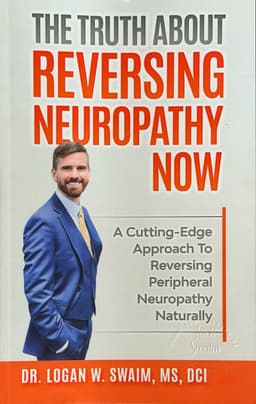
Written by Our Clinical Director
The Truth About Reversing Neuropathy Now
Dr. Logan Swaim, MS, DC wrote the book on what actually helps neuropathy — why nerves degenerate, what “you'll have to live with it” misses, and the drug-free approach we use at the clinic every day.
Read about the book →Visit The Roots Neuropathy
One clinic. One focused neuropathy program.


Dr. Logan Swaim, Dr. Laura Swaim & Dr. Grayson Fox
Meet the full teamThe Roots Neuropathy
a program of The Roots Health Centers
8209 Natures Way, Unit 115
Lakewood Ranch, FL 34202
(941) 877-1507- Mon
- 9–1 · 2–6:30
- Tue
- 11–2 · 3–6:30
- Wed
- 9–2
- Thu
- 9–1 · 2–6:30
- Fri
- 9–2
- Sat–Sun
- Closed
You deserve another conversation.
If you've been told to just live with neuropathy, learn what's actually possible — at a free seminar or a $49 new-patient evaluation.