

Neuropathy Treatments
Balance Testing & Training
Your feet are sensory organs — thousands of receptors reporting the ground to your brain with every step. Neuropathy turns that feed to static, and balance quietly erodes long before most people notice. We measure balance objectively at every evaluation, and we train it deliberately, because falls — not foot pain — are neuropathy's most serious everyday risk.
Ask about your situation
Three quick questions — our team responds within one business day.
- 4.8 from 655+ Google reviews
- Caring for the Suncoast since 2016
- Led by the author of a book on reversing neuropathy
- Drug-free & surgery-free program
Why balance deserves its own testing
Balance runs on three inputs: what your feet feel, what your eyes see, and what your inner ear reports. Neuropathy degrades the first input — and the brain is so good at compensating with the other two that most people have no idea how much they've lost. Daylight and familiar rooms hide the deficit. A dark hallway, an uneven sidewalk, or a quick turn reveals it.
That's why 'I feel a little unsteady' and what testing shows are so often different stories. Objective balance measurement takes the guesswork out: it quantifies how you actually perform when the visual crutch is reduced, how your weight shifts, and how your body reacts to challenge — numbers that tell us your real fall risk and give your care plan a target.
Balance testing is included in every $49 neuropathy evaluation, and it's repeated at progress re-exams — so improvement isn't a feeling, it's a measurement moving.
What the balance assessment involves
The assessment is simple to experience and rich in information. In the clinic, we evaluate your stability under progressively harder conditions — feet together, narrowed stance, reduced visual input — alongside the sensory and circulation testing that explains WHY balance is behaving the way it is.
- Objective, repeatable measurement — the same protocol at baseline and every re-exam
- Performed safely, with support at hand the entire time
- Interpreted together with your 16-point sensory exam and circulation assessment
- Explained the same visit, in plain English, with your fall risk put in real terms
From testing to training: rebuilding steadiness
Measurement is step one; the encouraging part is step two. Balance is trainable at any age — when feet under-report, the brain can learn to make better use of the signals that remain, and the small stabilizing muscles of the feet and ankles respond to deliberate work.
In-clinic balance and stimulation work is a core component of the neuropathy program for patients whose testing shows meaningful risk, and it's paired with a home routine matched to your level. As circulation and sensation improve through the rest of your plan, balance training converts those gains into steadiness you can actually use — on dark hallways, curbs, and golf courses.
If you've started touching walls on the way to the bathroom at night, or you've stopped trusting curbs and stairs — that's not clumsiness, and it's not just age. It's measurable, and it's trainable.

Medically reviewed by
Founder & Clinical Director of The Roots Neuropathy and author of The Truth About Reversing Neuropathy Now. He leads every neuropathy evaluation and care plan at our Lakewood Ranch clinic.
Common Questions
Frequently asked questions
More ways we can help
Neuropathy Evaluation & Testing
Objective testing that shows what's actually happening in your nerves — circulation, sensation, and balance.
The Roots Neuropathy Program
Our structured, drug-free program built around the four things struggling nerves need most.
Red Light Therapy for Neuropathy
Painless 15-minute light sessions that support circulation — a core piece of our nerve-care plans.
Chiropractic Care for Neuropathy
Gentle, instrument-assisted care that supports the nervous system behind your symptoms.
Shockwave Therapy
Focused acoustic-wave treatment used where indicated to support circulation and tissue healing — 8–15 minutes per session.

Nutritional Support for Nerve Health
Practical guidance on the nutrients nerves depend on — and the deficiencies that quietly work against them.
Conditions this supports

Symptoms it can help with
Verified Google Reviews
What Neuropathy Patients Say
I’m enjoying my treatments at roots , I wish I would have found them sooner . They have helped me so much . I have neuropathy and before I started going I could barely walk and was in so much pain. Now after a little over 4 weeks my pain is barely there and walking is so much better! Also getting adjustments from Dr Logan and it’s improved how I feel physically, and has helped my sleep and more. There are so many different areas they can help you in , give them a call I highly recommend them.”
kimberly L.
Neuropathy TreatmentEveryone at Roots is super warm and inviting! There is a calming atmosphere and calming aroma the second you walk in. They are all about educating their patients! I have been going for about 3 months and I am feeling about 90% better! No more nerve pain as well as better sleep. Highly recommend!”
Sabrina T.
Neuropathy TreatmentNice to get to the root of my foot pain.”
Kelly W.
Neuropathy Treatment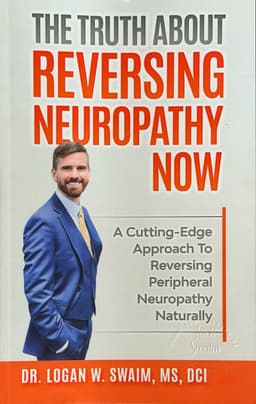
Written by Our Clinical Director
The Truth About Reversing Neuropathy Now
Dr. Logan Swaim, MS, DC wrote the book on what actually helps neuropathy — why nerves degenerate, what “you'll have to live with it” misses, and the drug-free approach we use at the clinic every day.
Read about the book →Visit The Roots Neuropathy
One clinic. One focused neuropathy program.


Dr. Logan Swaim, Dr. Laura Swaim & Dr. Grayson Fox
Meet the full teamThe Roots Neuropathy
a program of The Roots Health Centers
8209 Natures Way, Unit 115
Lakewood Ranch, FL 34202
(941) 877-1507- Mon
- 9–1 · 2–6:30
- Tue
- 11–2 · 3–6:30
- Wed
- 9–2
- Thu
- 9–1 · 2–6:30
- Fri
- 9–2
- Sat–Sun
- Closed
You deserve another conversation.
If you've been told to just live with neuropathy, learn what's actually possible — at a free seminar or a $49 new-patient evaluation.