
Neuropathy Treatments
Treatment for Neuropathy in Legs and Feet: Your Options, Explained
Treatment for neuropathy in the legs and feet works best when it matches the reason your nerves are struggling — circulation, compression, inflammation, or lack of stimulation. This guide walks through the options honestly: what conventional care offers, what a structured drug-free program looks like, and how to decide what fits your case.
Not sure where to start?
Three quick questions — our team responds within one business day.
- 4.8 from 655+ Google reviews
- Caring for the Suncoast since 2016
- Led by the author of a book on reversing neuropathy
- Drug-free & surgery-free program
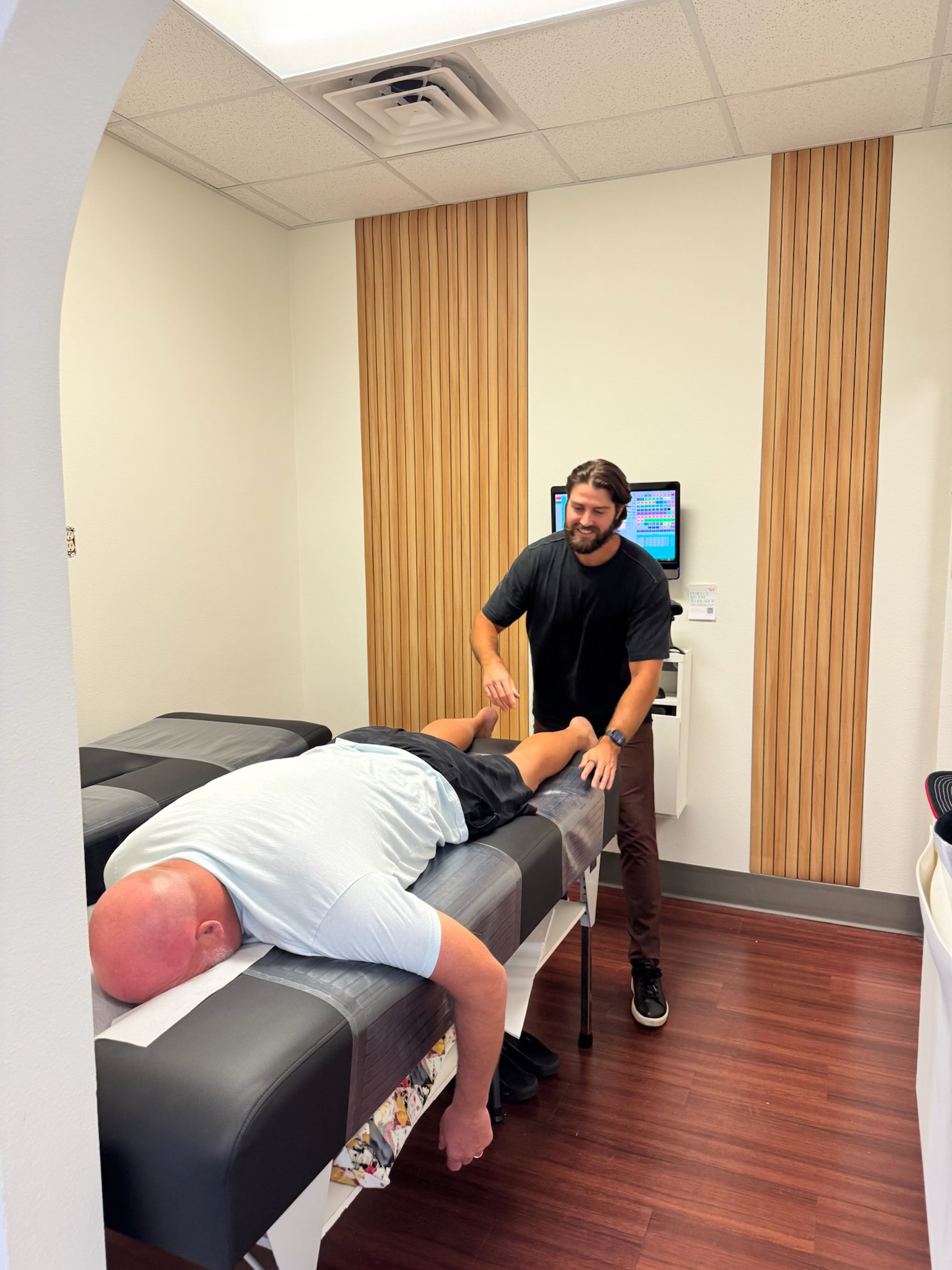
Inside the program
Care built around your nerves,
not a prescription pad.
Why neuropathy usually shows up in the legs and feet first
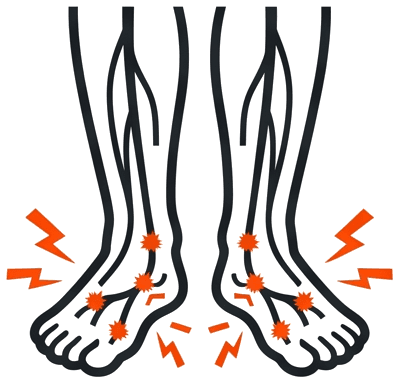
The nerves that serve your feet are the longest in your body — signals travel from your spine all the way to your toes. Those long nerve fibers are the most vulnerable to anything that disrupts their blood supply or metabolism, which is why numbness, tingling, and burning almost always start in the toes and feet before moving up the legs.
The most common drivers we see in our Lakewood Ranch clinic are diabetes and blood-sugar problems, chemotherapy, circulation issues, past surgeries or injuries, and cases where no cause was ever identified — what doctors call idiopathic neuropathy. Understanding which driver applies to you matters, because it changes what kind of care is likely to help. If you want the deeper background first, start with our plain-English guide to what neuropathy is.
Conventional peripheral neuropathy treatments
Most people start where their primary doctor or neurologist starts: prescription nerve-pain medications, physical therapy referrals, and management of the underlying condition (like tightening blood-sugar control for diabetic neuropathy). These have a real place. Medication can take the edge off severe symptoms, and good glucose management is essential for anyone with diabetes.
The honest limitation is that symptom-management tools are designed to quiet the signal, not to change the environment the nerve lives in. Many patients tell us they reached a point where the prescriptions dulled the pain but the numbness, balance problems, and progression continued — and they were told to live with it. That experience is common enough that the National Institute of Neurological Disorders and Stroke lists symptom management and treating the underlying cause as the two pillars of standard care.
- Prescription nerve-pain medications — can reduce pain signals; they don't address circulation or nerve environment
- Physical therapy — supports strength and balance, especially fall prevention
- Managing the underlying condition — essential groundwork in diabetic and metabolic cases
- Injections or procedures — considered in specific, usually severe cases
Drug-free neuropathy care: how our program approaches it
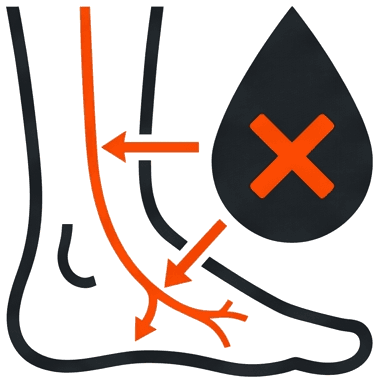
Our program is built around a simple idea: struggling nerves need a better environment to function in. Rather than masking the signal, we work on the four factors that most often hold nerves back — circulation, compression, inflammation, and stimulation. Each care plan combines the pieces below based on what your evaluation actually shows.
First, we test
Objective measurement comes before any recommendation.
Neuropathy Evaluation & Testing
Objective testing that shows what's actually happening in your nerves — circulation, sensation, and balance.
Learn more
Balance Testing & Training
In-clinic balance measurement and retraining — because falls, not foot pain, are neuropathy's biggest everyday risk.
Learn moreThen, we care
Your plan combines the components your evaluation actually indicates.
The Roots Neuropathy Program
Our structured, drug-free program built around the four things struggling nerves need most.
Learn more
Red Light Therapy for Neuropathy
Painless 15-minute light sessions that support circulation — a core piece of our nerve-care plans.
Learn more
Chiropractic Care for Neuropathy
Gentle, instrument-assisted care that supports the nervous system behind your symptoms.
Learn more
Shockwave Therapy
Focused acoustic-wave treatment used where indicated to support circulation and tissue healing — 8–15 minutes per session.
Learn more
Nutritional Support for Nerve Health
Practical guidance on the nutrients nerves depend on — and the deficiencies that quietly work against them.
Learn moreEvery plan is personalized — each person and case is different, so we take a personalized approach based on what your evaluation shows. No two care plans at The Roots look the same.
Why testing comes before any treatment recommendation
You can’t fix what you haven’t measured. Before anyone at The Roots recommends care, you go through a full neuropathy evaluation: a one-on-one consultation, circulation assessment, 16-point sensory exam, balance test, and any necessary X-rays. The results tell us — and you — how much nerve function remains and which factors are holding it back.
That evaluation is also where honesty lives: if what we find suggests you need a different kind of provider, we say so and point you in the right direction. If you’ve had normal EMG results but your symptoms are real, the evaluation is especially useful — standard nerve-conduction studies primarily assess large nerve fibers, and small fiber neuropathy can be missed.
How to choose a neuropathy treatment provider
Wherever you go — including somewhere other than us — look for these markers of a provider who takes neuropathy seriously:
- They test before they recommend — objective baseline measurements, not just a questionnaire
- They explain WHY your nerves are struggling, in language you understand
- They're honest about who they can and can't help
- They show you progress in numbers, not just impressions
- They have a real local track record you can verify through reviews
Our clinic serves Lakewood Ranch, Sarasota, Bradenton and the surrounding Suncoast communities.
Authoritative further reading

Medically reviewed by
Founder & Clinical Director of The Roots Neuropathy and author of The Truth About Reversing Neuropathy Now. He leads every neuropathy evaluation and care plan at our Lakewood Ranch clinic.
Common Questions
Neuropathy treatment FAQs

Visit The Roots Neuropathy
Get an honest answer about your legs and feet.


Dr. Logan Swaim, Dr. Laura Swaim & Dr. Grayson Fox
Meet the full teamThe Roots Neuropathy
a program of The Roots Health Centers
8209 Natures Way, Unit 115
Lakewood Ranch, FL 34202
(941) 877-1507- Mon
- 9–1 · 2–6:30
- Tue
- 11–2 · 3–6:30
- Wed
- 9–2
- Thu
- 9–1 · 2–6:30
- Fri
- 9–2
- Sat–Sun
- Closed
You deserve another conversation.
If you've been told to just live with neuropathy, learn what's actually possible — at a free seminar or a $49 new-patient evaluation.