

Small Fiber Neuropathy: What It Is, Why It Burns, and Why There's Still Hope
Dr. Logan Swaim, MS, DC
If you've been told nothing more can be done about your burning, tingling nerve pain, here's what small fiber neuropathy really is — and why you deserve another conversation about what's possible.
You feel the burning in your feet at night, the tingling that creeps up when you're trying to rest, the strange jolt of pain from something as small as a bedsheet against your skin. Maybe a test came back "normal," maybe you were told it's just part of getting older, maybe you heard the words "nothing more can be done." Small fiber neuropathy is damage or dysfunction in the smallest nerve endings in your body — the tiny fibers that carry pain and temperature signals and help regulate things you never think about, like sweating and blood flow. When those fibers misfire, the sensations feel oversized and bizarre, and that does not mean you're imagining it. At The Roots Neuropathy in Lakewood Ranch, FL, we help people make sense of these symptoms and explore what care for peripheral neuropathy can look like when the usual answers have run out.
What small fiber neuropathy actually is
Your peripheral nerves are bundles of fibers of different sizes. The large fibers handle strength, coordination, and the kind of touch that tells you where your foot is in space. The small fibers — the ones at the center of this condition — are thinly wrapped or bare nerve endings that sit close to the surface of your skin and around your organs. They carry the signals for pain, heat, cold, and itch, and they help run the "automatic" systems your body manages without your input.
Because small fibers are so fine, standard nerve-conduction tests, which mostly measure the big fibers, can come back looking fine even while the small ones are struggling. That's one reason so many people get told their results are "normal" while their symptoms are very real. Naming the problem correctly is the first step toward a more useful conversation about it.
What small fiber neuropathy feels like
The small fibers are wired for sensation, so when they're irritated or damaged, the symptoms are loud and often hard to describe. People tell us it feels like:
- Burning in the feet, lower legs, or hands — sometimes worse at night
- Tingling, prickling, or a "pins-and-needles" buzz that won't settle
- Sharp, stabbing, or electric-shock jolts that come out of nowhere
- Sensitivity to touch, where light contact like socks or sheets feels painful
- Temperature sensitivity — feet that feel like ice or like they're on fire
- Numbness or a "walking on cushions" feeling layered on top of the pain
If you recognize yourself in that list, you are not being dramatic, and you're not alone. These are textbook small-fiber symptoms. We've written more about what's behind the burning pain, the tingling, the heightened sensitivity to touch, the sharp, stabbing pain, and the sensitivity to hot and cold so you can see how each one ties back to those small nerves.
Why it happens — the common contributors
Small fiber neuropathy isn't one single disease. It's a pattern of nerve irritation that can have several drivers, and sometimes more than one is at play at the same time. Understanding the contributors matters, because it shapes what care should focus on.
Blood sugar and metabolic strain
Elevated or fluctuating blood sugar — including in the prediabetes range — is one of the most common contributors to small fiber damage. The small fibers seem to be especially vulnerable to metabolic stress, which is part of why symptoms can show up before a formal diabetes diagnosis.
Circulation and nerve nourishment
Those tiny nerve endings rely on a healthy supply of blood to stay nourished. When circulation to the lower legs and feet is reduced, the small fibers are often the first to feel it, which can show up as burning, coldness, and that "my feet fall asleep" sensation.
Inflammation, autoimmune activity, and other factors
Autoimmune conditions, certain vitamin imbalances (such as low B12), thyroid issues, and ongoing inflammation can all irritate small nerves. And in a meaningful share of cases, no single cause is ever pinned down — which is why the term idiopathic neuropathy, meaning "of unknown origin," exists. "Idiopathic" doesn't mean hopeless. It means the search for the trigger wasn't finished.
When to seek prompt medical care
Supportive care for your nerves works alongside your medical team — it doesn't replace it. Please contact your physician or seek prompt medical attention if you notice any of the following:
- A sudden onset or rapid worsening of numbness, weakness, or pain
- An open sore, blister, or wound on a numb foot that isn't healing
- Signs of infection — redness, warmth, swelling, drainage, or fever
- New weakness, loss of balance with falls, or changes in bladder or bowel control
- Symptoms tied to chest pain, dizziness, or fainting
Good neuropathy care is a team effort. We're glad to coordinate with your other providers so your whole picture is being looked after, not just one slice of it.
Why the symptoms can stick around — and where hope comes in
Here's the part that often gets skipped. Many people are handed a label and a prescription and sent on their way, with the underlying contributors — the blood sugar swings, the reduced circulation, the inflammation — never really addressed. When those drivers keep nudging the small fibers, the symptoms tend to keep speaking up.
That's also the source of the hope. Nerve tissue is more responsive than people are often led to believe, and small fibers in particular have shown a real capacity to settle and recover function when the environment around them improves. We can't promise any specific result, and anyone who does should make you cautious. What we can say honestly is this: being told "nothing more can be done" is rarely the same as nothing more being possible. You deserve another conversation about what's worth exploring.
How we approach small fiber neuropathy care
Our job is to understand your nerves and your contributors, then build a plan around them. Every person is different, so we take a personalized approach rather than running everyone through the same template. It starts with listening and measuring, not guessing.
A thorough neurological evaluation
We begin with a detailed history and a hands-on neurological evaluation to map where your sensation is affected, check your circulation, and look at the factors that may be feeding the problem. This is how we move past "your test was normal" toward a picture that actually matches what you feel.
Supporting circulation and nerve health
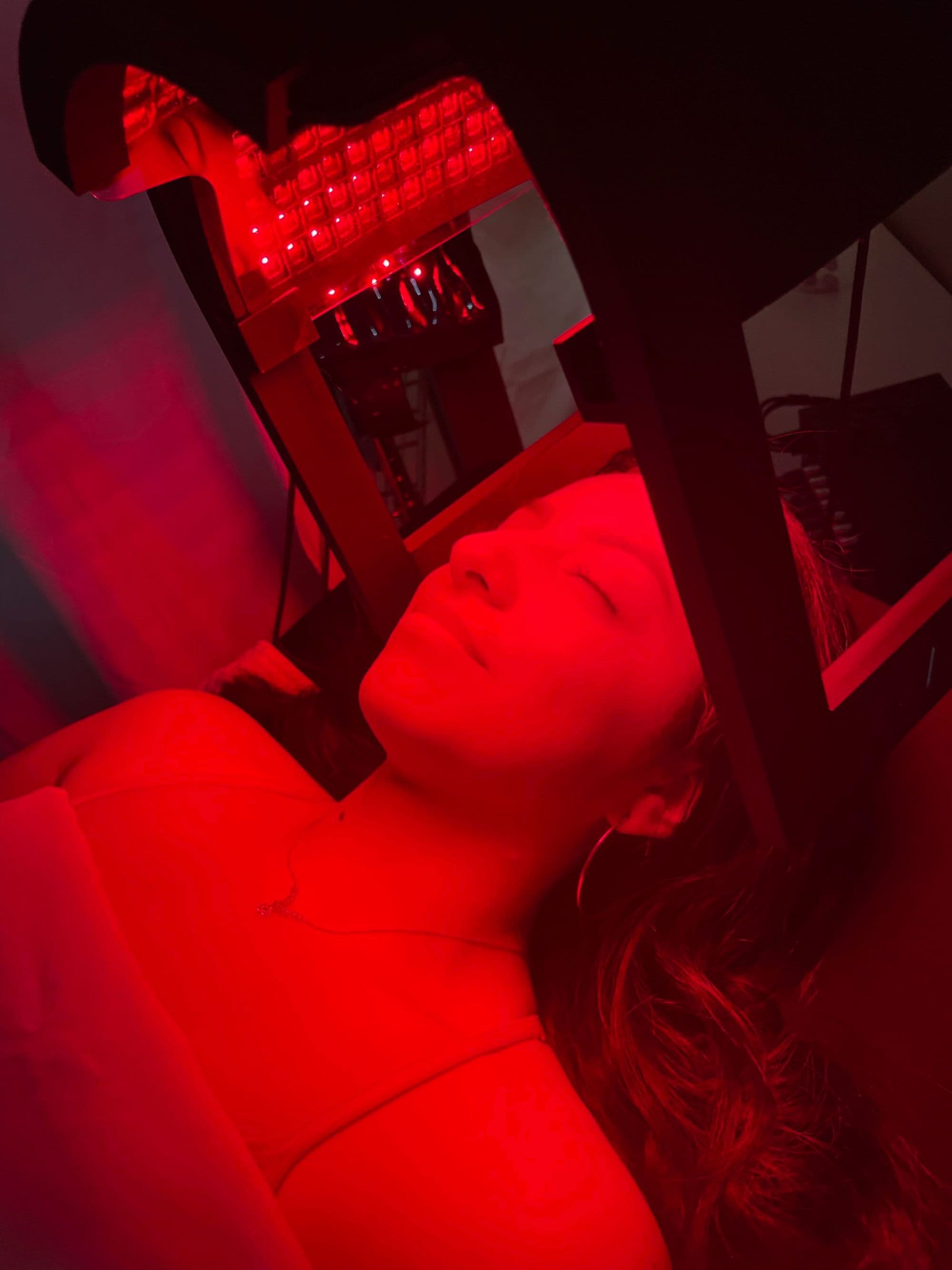
Because those small fibers depend on good blood flow and a healthy environment to function, much of our care centers on supporting circulation and reducing the stress on the nerves. One of the tools we may draw on is red light therapy, which we use to support circulation and the body's own healing processes as part of a broader plan.
A plan built around your life
From there we shape a path that fits your goals, your schedule, and your starting point. Because each person responds differently, we don't put a stopwatch on it — we focus on consistent, measurable care and honest check-ins about how you're doing.
Where to start in Lakewood Ranch
The Roots Neuropathy is led by Dr. Logan Swaim, MS, DC, who wrote a book on neuropathy because he believes too many people are sent home without a real plan. If your burning, tingling, or stabbing symptoms have been brushed aside, the most useful next step is simply a conversation — no pressure, no obligation.
We offer a complimentary consultation where we listen to your story, answer your questions, and help you understand whether our approach is a fit for your situation. You can schedule your complimentary consultation here or call our Lakewood Ranch office at (941) 877-1507. With a 4.8-star rating from 625+ Google reviews, our community has trusted us to take their nerve symptoms seriously — and we'd be honored to do the same for you.
Frequently Asked Questions
Is small fiber neuropathy the same as peripheral neuropathy?
Small fiber neuropathy is one specific type within the larger family of peripheral neuropathy. "Peripheral" refers to nerves outside the brain and spinal cord; "small fiber" narrows it to the tiny fibers that carry pain and temperature. You can learn more on our peripheral neuropathy page.
Why did my nerve test come back normal if I have so many symptoms?
Standard nerve-conduction studies mostly measure large nerve fibers. Small fiber problems can hide from those tests, so it's common to have very real burning, tingling, or sensitivity while your results look "normal." That mismatch is a hallmark of small fiber issues, not proof that nothing is wrong.
What does "idiopathic" mean, and is it hopeless?
Idiopathic simply means the cause hasn't been identified yet. It is not a dead end. Many contributors — like blood sugar, circulation, or inflammation — can be explored even when an initial workup didn't find a single answer. Our idiopathic neuropathy page goes deeper on this.
Can anything really help once nerves are damaged?
We never promise a specific outcome, and we'd encourage you to be wary of anyone who does. What we can say honestly is that nerve tissue can be more responsive than people are told, and supporting the conditions around the nerves — circulation, metabolic stress, inflammation — may help. Because each person is different, the right starting point is an evaluation, not a guarantee.
Do I have to stop seeing my regular doctor?
Not at all. Our care is meant to complement your medical team, not replace it. We're happy to coordinate so your full picture is being cared for. If you'd like to talk it through, you can book a complimentary consultation anytime.

Medically reviewed by
Founder & Clinical Director of The Roots Neuropathy and author of The Truth About Reversing Neuropathy Now. He leads every neuropathy evaluation and care plan at our Lakewood Ranch clinic.
Learn More
Conditions we help with
Peripheral Neuropathy
Peripheral neuropathy is nerve damage to the peripheral nervous system — the vast network connecting your brain and spinal cord to the rest of your body. Numbness, tingling, burning pain, and weakness in the extremities are its hallmarks. It is treatable.
Learn moreIdiopathic Neuropathy
Idiopathic neuropathy means the nerve damage has no identifiable cause after standard workup. It accounts for roughly one-third of peripheral neuropathy cases. The label is honest — but it should be the beginning of the conversation, not the end.
Learn moreKeep Reading
More on neuropathy
Compression Gloves for Hand Neuropathy: Do They Help?
Compression gloves are a popular pick for numb, tingling hands — but do they actually help neuropathy? Here's what they do, don't do, and how to use them safely.
Neuropathy in the Fingers vs. Carpal Tunnel: How to Tell Them Apart
Numbness and tingling in your fingers can come from more than one place. Here's how to tell peripheral neuropathy apart from carpal tunnel syndrome — and what to do next.
Diabetic Neuropathy Foot Care: A Daily Checklist
When diabetic neuropathy dulls sensation in your feet, small problems can go unnoticed. Here's a practical daily checklist for protecting them.


