

Body Systems
Your body works as one connected system.
Digestion, hormones, immunity, mood — every body system depends on nervous-system regulation. Explore the systems our team maps every day to understand what's driving how a patient feels.
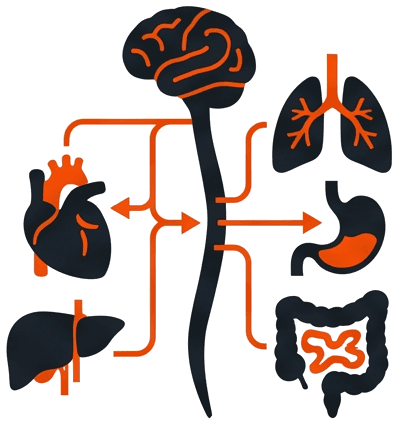
The body's automatic regulation system
Autonomic Nervous System
The autonomic nervous system runs everything you don't have to think about — heart rate, breathing, digestion, sleep cycles, stress response. When it's regulated, the body recovers easily; when it's stuck in 'fight or flight,' everything else strains.
Explore system →
Head, neck, and sensory systems
ENT, Sinus, Vision & Balance
The structures of the upper neck and head — ears, nose, throat, sinuses, eyes, balance organs — share nerve supply with the upper cervical spine. Issues in this region show up as recurring sinus issues, balance disturbances, vision strain, and ear or throat sensitivity.
Explore system →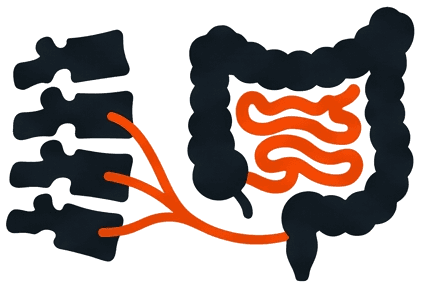
Large intestine, bladder, and elimination
Lower GI & Elimination
The lower thoracic and lumbo-sacral regions house nerves that influence the colon, bladder, and elimination function. Chronic constipation, IBS-style patterns, and bladder issues frequently correlate with structural patterns in this region.
Explore system →
Joints, muscles, and the structures that move you
Musculoskeletal & Mobility
Every region of the spine influences musculoskeletal function. Chronic pain, restricted movement, and joint dysfunction often start as a small structural pattern that compounds over years. Early structural assessment + corrective care prevents the cascade.
Explore system →
The cortisol axis — how the body handles stress
Stress Response & Adrenal
Chronic stress shows up everywhere. The lower thoracic spine houses adrenal nerve supply, and dysregulation here often correlates with the cluster: poor sleep, fatigue, low motivation, abdominal weight gain, anxiety. Care here is about supporting nervous system recovery.
Explore system →These pages describe how nervous-system regulation can support each body system — they're educational, not medical advice. Always consult your medical doctor for serious health concerns; our care complements but doesn't replace primary medical care.
Want a personalized look at your nervous system?
Start with a complimentary consultation. We use a neurological evaluation to map your nervous system in person — no commitment, no cost.