
Does Red Light Therapy Help Neuropathy? What to Know Before You Try It
Dr. Logan Swaim, MS, DC
Curious whether red light or laser therapy can help neuropathy? Here's how it works, what research does and doesn't show, and where it fits in a bigger plan.
If your feet burn, tingle, or feel numb, you've probably seen red light and laser devices advertised for nerve pain and wondered if there's anything to it. So, does red light therapy help neuropathy? The honest answer: some early research suggests it may help support nerve comfort and function for some people, but the evidence is still developing, results vary, and red light is not a stand-alone answer. It tends to make the most sense as one piece of a broader plan built around finding out why your nerves are struggling in the first place. Below, we'll explain how red light therapy works, what research shows and doesn't show, who it may suit, and how we use it in Lakewood Ranch.
What Red Light Therapy Actually Is
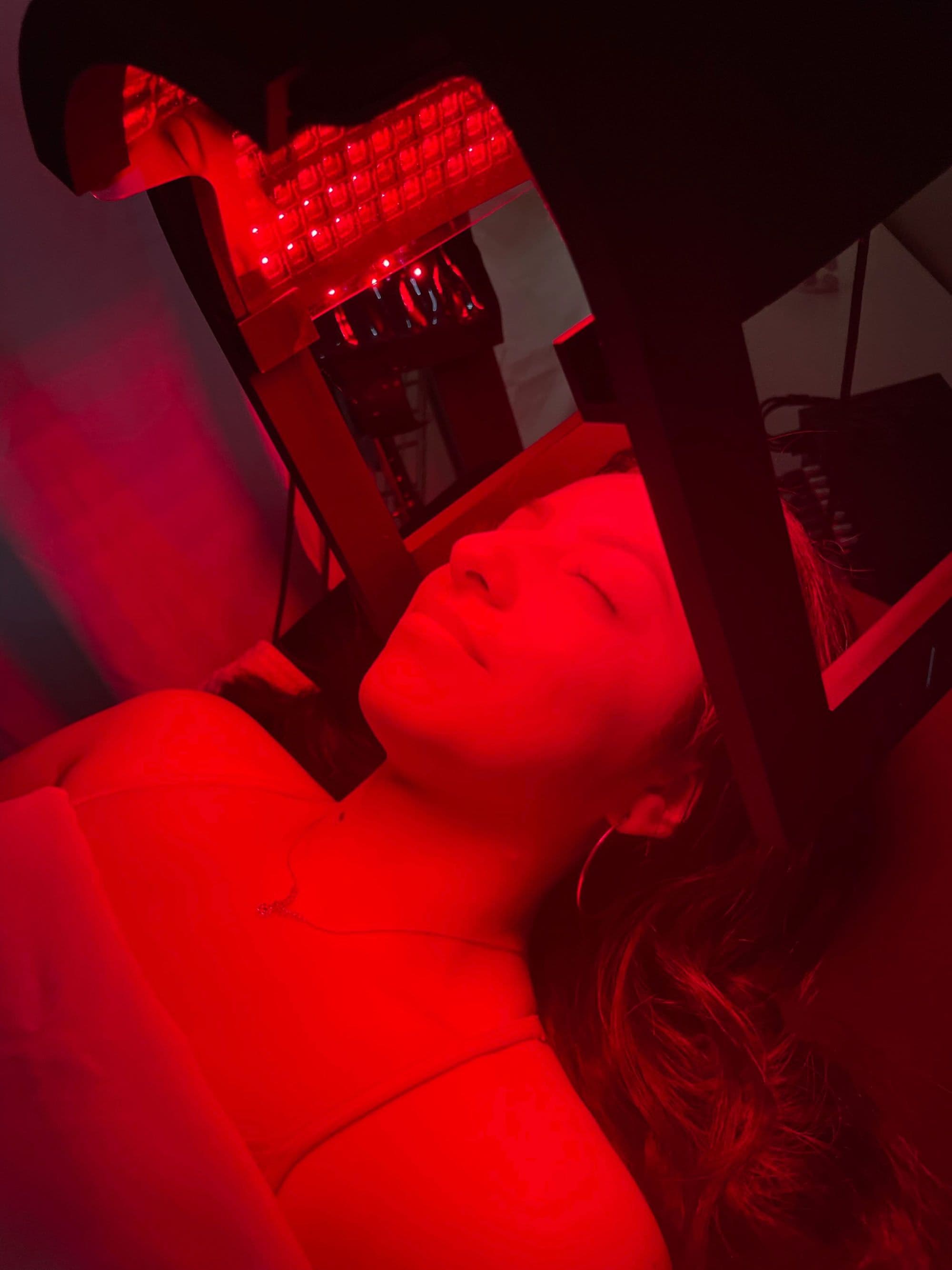
Red light therapy, also called photobiomodulation, uses specific wavelengths of red and near-infrared light delivered to the skin. The light is absorbed by cells, and the leading theory is that it influences the way cells produce energy, which may affect inflammation, circulation, and tissue repair signals. You may also see it called low-level laser therapy or cold laser. The devices differ in how they deliver light, but the general idea is the same.
It isn't heat treatment and it isn't a tanning bed. Sessions are typically painless, and most people feel gentle warmth at most. You can read more about how we approach it on our red light therapy page.
Why Nerves Might Respond to Light
Healthy nerves need a steady supply of energy and good blood flow. When the small blood vessels that feed nerves are stressed, as can happen with high blood sugar, injury, or other causes, nerve cells can struggle. That is one reason neuropathy and circulation are so closely linked.
The theory behind red light is that it may support cell energy and local circulation, giving stressed nerve tissue better conditions to work with. This is a plausible mechanism, not a proven guarantee, and it is why red light is considered supportive rather than a fix on its own.
What the Research Does and Doesn't Show
Here is where we try to be straightforward:
- Early studies are encouraging but limited. Some small studies of people with nerve symptoms, including those related to diabetes, have reported improvements in comfort or sensation after light-based therapy.
- Study quality varies. Many trials are small, use different devices and settings, or lack strong comparison groups, which makes it hard to draw firm conclusions.
- Not everyone responds. Some people notice a difference and others don't. We can't predict who will.
- It doesn't address the root cause. If a vitamin deficiency, blood sugar problem, or pinched nerve is behind your symptoms, light alone won't change that.
Because of this, we think the most useful way to talk about red light is in terms of what may help, paired with a clear evaluation and realistic expectations.
Which Symptoms People Ask About
People typically ask about red light for:
- Burning pain in the feet or legs
- Tingling in the legs and feet
- Numbness or reduced sensation
- Cold, sluggish feet
- Sensitivity to touch
These symptoms can come from many different problems, including peripheral neuropathy, diabetic neuropathy, and issues starting in the low back. That's why we don't recommend picking a device off the shelf before you know what you're dealing with.
How We Use Red Light in a Nerve-Care Plan
At The Roots Neuropathy, red light therapy is one of several tools, not the whole plan. It begins with our neuropathy evaluation: a consultation, circulation assessment, a 16-point sensory exam, balance testing, and necessary X-rays. From there, Dr. Logan Swaim and the team review what they find and talk through the options that may fit, which can include red light therapy alongside other care described on our treatments page.
A red light session is about fifteen minutes, with around forty-five minutes in the clinic in total. Dr. Logan often says that symptoms are like a check-engine light: they point to a problem, but not always where it is. Red light can be part of how we support the nerves, while the evaluation helps us look for the cause.
We also encourage you to keep your medical doctor informed about what you're doing, especially if you have diabetes, a pacemaker, or are pregnant, or if you take medicines that make you sensitive to light.
Questions to Ask About Any Light Therapy
Whether you're considering us or someone else, these questions can help you decide:
- Will I get an evaluation before any light is used?
- What is the plan if this doesn't help?
- Is red light the only thing being offered, or part of a plan?
- Are results being promised? (Be cautious if so.)
- How will progress be measured so we can tell if it's working?
Good answers sound like patterns and measurements, not promises. For other approaches worth knowing about, see our guides to natural options for neuropathy and nerve pain relief without medication.
When to Be Evaluated Sooner
See a medical professional promptly if you have sudden weakness, numbness on one side of the body, trouble speaking, a foot wound that isn't healing, or symptoms that are spreading quickly. These need a proper workup rather than a trial of any device. If you're not sure where your symptoms are coming from, our overview of how neuropathy is diagnosed explains what an exam looks for.
Laser vs. Red Light: Is There a Difference?
People search for "laser" and "red light" as if they were two different things, and the labels are confusing because the terms overlap. Here is a plain-English way to sort them out:
- Low-level (cold) laser delivers a narrow, focused beam of light to a small spot. It does not cut or heat tissue, and it is not the same as the high-power lasers used in surgery.
- Red and near-infrared light panels use LEDs to cover a wider area at once, such as the whole foot or lower leg.
- Both fall under photobiomodulation, the umbrella term for using specific wavelengths of light to influence cell activity.
So when someone asks whether laser helps neuropathy, they are usually asking the same question as red light: can these wavelengths support nerve comfort and function? The research on both is early, uses a mix of devices, wavelengths, and settings, and has not shown that one clearly beats the other. Because of that, we would rather you focus on the bigger picture than on the label.
Three things matter more than the device name. First, whether anyone has looked for the reason your nerves are struggling, which is what a neuropathy evaluation is for. Second, whether the light is part of a plan with a way to track progress. Third, whether the provider is honest that results vary. If you want to understand the underlying condition first, our page on peripheral neuropathy is a good place to start, and you can see how we use light on our red light therapy page.
Frequently Asked Questions
Does laser therapy help neuropathy?
Some small studies suggest low-level laser and red light may help support nerve comfort for some people, but research is still developing and results vary. It is best viewed as one possible part of a broader plan.
Is cold laser the same as red light therapy?
They are related. Both use specific wavelengths of light and fall under photobiomodulation, but a cold laser delivers a focused beam to a small area while red light panels cover a wider area. Neither is the same as a surgical laser.
Is laser or red light better for neuropathy?
Current research doesn't show that one is clearly better than the other. The cause of your symptoms and the quality of the overall plan tend to matter more than the device.
Can red light therapy reverse nerve damage?
We can't promise that. Light may help support the conditions nerves need to function, but the underlying cause matters, and an evaluation is the way to find it.
Is red light therapy safe for neuropathy?
It is generally well tolerated and painless, but it isn't right for everyone. Tell your care team about diabetes, pregnancy, implants, skin conditions, or light-sensitizing medicines before you start.
How many sessions will I need?
It varies from person to person, and we don't make predictions. After an evaluation, our team explains what they recommend and why.
Can I use a home device instead?
Home devices vary widely in wavelength and power, and it's hard to know if they match what has been studied. Talk with your care team before relying on one.
Start With a Clear Picture
If you're weighing red light therapy for your feet or hands, the best first step is understanding what's behind your symptoms. Schedule your neuropathy consultation and let our team walk you through your options.

Medically reviewed by
Founder & Clinical Director of The Roots Neuropathy and author of The Truth About Reversing Neuropathy Now. He leads every neuropathy evaluation and care plan at our Lakewood Ranch clinic.
Learn More
Conditions we help with
Peripheral Neuropathy
Peripheral neuropathy is nerve damage to the peripheral nervous system — the vast network connecting your brain and spinal cord to the rest of your body. Numbness, tingling, burning pain, and weakness in the extremities are its hallmarks. It is treatable.
Learn moreDiabetic Neuropathy
Diabetic neuropathy is nerve damage driven by chronically elevated blood sugar. It is the most common form of neuropathy in the United States, affecting roughly half of all people with type 2 diabetes. Numbness, burning, and tingling in the feet are the classic early signs.
Learn moreRelated Reading
Related articles
Natural Remedies for Neuropathy: What Helps, What's Hype
Movement, foot care, diet, blood sugar management — which natural remedies for neuropathy actually help, and which are overhyped? An honest, evidence-ranked breakdown.
Neuropathy Pain Relief Without Medication: Options Ranked
Looking for neuropathy pain relief without medication? Here's an honest, ranked rundown of what actually helps, what's just comfort, and what's mostly hype.
How Is Neuropathy Diagnosed? The Tests, Explained
From sensory exams to nerve-conduction studies: the tests behind a neuropathy diagnosis, what each measures, and why 'normal' results don't always end the story.
Keep Reading
More on neuropathy
Calf Numbness: Why Your Calf Feels Numb and When to Get It Checked
A numb calf is usually a nerve story that starts in the low back, near the knee, or in the feet and climbs. Learn what your numbness pattern can mean, the red flags to know, and what an evaluation looks at.
Forearm Numbness: Why Your Forearm Feels Numb and When to Get It Checked
A numb forearm is almost always a nerve story, starting in the neck, the elbow, or the arm itself. Learn what your numbness pattern can mean, the red flags that need care now, and what an evaluation looks at.
Numb Knee: Why Your Knee Feels Numb and When to Get It Checked
A numb patch on your knee usually traces back to a nerve. Learn the common causes, from knee surgery to the low back to neuropathy, the red flags that need care now, and what an evaluation looks at.


